![[CITYPNG.COM]Proudly Made In Canada Stamp Image PNG - 1500x1500.png](https://static.wixstatic.com/media/7a3423_9f299d1462164092bd6c7171c537f39d~mv2.png/v1/crop/x_0,y_161,w_1500,h_1179/fill/w_126,h_99,al_c,q_85,usm_0.66_1.00_0.01,enc_avif,quality_auto/%5BCITYPNG_COM%5DProudly%20Made%20In%20Canada%20Stamp%20Image%20PNG%20-%201500x1500.png)

How to Fix a Squeaky Garage Door in 5 Simple Steps

That high-pitched squeal every time your garage door opens isn't just annoying, it's your door telling you something needs attention. The good news is that most squeaky garage doors can be fixed in about 10 minutes with basic tools and the right lubricant.
Below, we'll walk through exactly what causes the noise, which lubricants actually work (and which make things worse), and a simple five-step process to quiet your door for good.
Why Your Garage Door Is Squeaking
That grinding, squealing sound every time your garage door moves? It's almost always metal rubbing against metal without enough lubrication. The fix is straightforward: lubricate all moving parts hinges, rollers, springs, and tracks using a garage-door-specific lubricant or white lithium grease. Tighten all bolts and nuts with a socket wrench, clean the tracks to remove debris, and perform this maintenance once a year. Most homeowners can quiet a squeaky garage door in about 10 minutes.
Now, let's look at what's actually causing the noise in the first place.
Worn or Dry Rollers and Wheels
Rollers are the small wheels that guide your door up and down the tracks. When the bearings inside dry out, metal grinds against metal with every open and close cycle. Steel rollers are especially prone to squeaking, though even quieter nylon rollers can make noise if the metal stem (the part that connects to the hinge) lacks lubrication.
Torsion and Extension Springs
Your garage door has one of two spring types. Torsion springs mount horizontally above the door opening. Extension springs run along the sides of the tracks. Both can squeak when the coils rub together without lubrication.
One important note: springs are under extreme tension. You can safely spray lubricant on them, but never attempt to adjust or replace springs yourself.
Rusty Hinges and Brackets
Hinges connect each panel of your garage door and pivot every time the door moves. That's hundreds of movements per year. Even a thin layer of rust or dried-out metal creates friction, and friction creates noise. Brackets the metal pieces that hold the tracks to the wall can also loosen over time and contribute to rattling sounds.
Lack of Regular Lubrication
Here's the honest truth: most squeaky garage doors simply haven't been maintained in a while. Moving parts dry out. Dust and grime build up. And eventually, you start hearing that familiar squeak. Annual lubrication prevents the problem before it starts.
Best Lubricant for a Squeaky Garage Door
Not all lubricants work the same way, and using the wrong one can actually make your squeaking worse. Here's what works and what to avoid:
White lithium grease: This is the go-to choice for garage doors. It sprays on as a liquid, then thickens into a long-lasting grease that stays in place. Works well on hinges, springs, and roller stems.
Silicone-based spray: A lighter option that won't attract as much dust. Good for tracks and opener rails where you want smooth movement without heavy buildup.
What to avoid: Standard WD-40 is a solvent and cleaner, not a lubricant. It can strip away the protective grease your door components actually have, leaving them drier than before. You might get temporary relief, but the squeaking comes back often worse.
Lubricant Type | Best For | Avoid Using On |
White lithium grease | Springs, hinges, roller stems | Nylon roller wheels |
Silicone spray | Tracks, opener rail | Heavy-duty spring lubrication |
WD-40 | Cleaning rust before lubricating | Any long-term lubrication |
Tools and Materials for Garage Door Lubrication
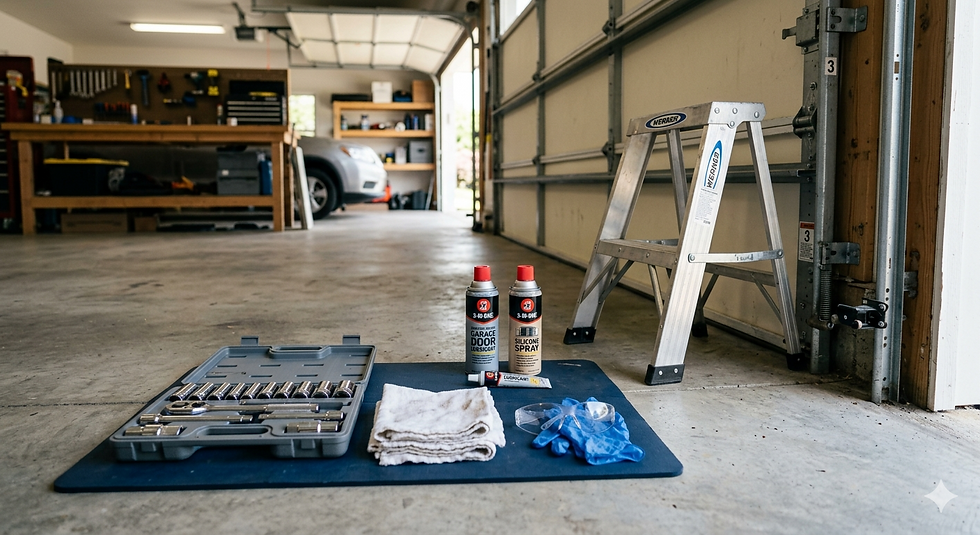
Before you start, gather everything you'll want within reach. Nothing complicated here just basic tools and the right lubricant.
Tools:
Socket wrench set
Step ladder
Clean rags or towels
Safety glasses and gloves
Materials:
White lithium grease or silicone-based garage door lubricant
Degreaser or household cleaner (for track cleaning)
How to Fix a Squeaky Garage Door Step by Step
With your tools ready, you can work through the entire process in about 10 minutes. Each step builds on the one before, so follow them in order for the best results.
Step 1. Disconnect the Opener and Secure the Door
First, look for the emergency release cord hanging from your opener's trolley it's usually red. Pull it to disconnect the door from the automatic system. Make sure the door is fully closed before you start. You don't want it moving unexpectedly while you're working on the hardware.
Step 2. Tighten All Bolts and Hardware
Next, grab your socket wrench and go around the entire door. Tighten every visible bolt on the hinges, brackets, and track mounts. Daily vibration loosens hardware over time, and loose bolts create rattling and squeaking on their own. This step alone eliminates a surprising amount of noise.
Step 3. Clean the Tracks and Remove Debris
Take a rag with some degreaser and wipe down the vertical and horizontal tracks. You're removing dirt, dust, and any rust buildup that could interfere with smooth roller movement.
Here's a common mistake to avoid: don't heavily grease the tracks. Rollers can slip on greasy tracks, and the grease attracts more dirt over time. Keep the tracks mostly cleana light wipe is all you want.
Step 4. Lubricate the Rollers and Hinges
Now for the main event. Apply lubricant to each hinge pin where the hinge pivots. Then spray the roller stems the metal shafts that connect the rollers to the hinges.
For steel rollers, you can lubricate the entire roller including the wheel. For nylon rollers, only lubricate the metal stem. Nylon doesn't absorb lubricant, so spraying the wheel itself just creates a mess.
Tip: After applying lubricant, spin each roller by hand a few times. This helps the lubricant work into the bearings where it's actually needed.
Work section by section, starting at one side of the door and moving across. This way you won't miss anything.
Step 5. Lubricate the Springs and Opener Rail
Finally, spray your torsion spring generously along its entire length. Coil-to-coil friction is a common noise source that many homeowners overlook.
Then move to the opener. Apply lubricant to the chain or screw rail (depending on your opener type) and the arm that connects the door to the trolley. Once everything is lubricated, reconnect the opener and run the door up and down a few times. This distributes the lubricant evenly across all the moving parts.
Garage Door Lubrication Mistakes to Avoid
Even with the right lubricant in hand, a few common errors can make your squeaky garage door worse instead of better.
Using WD-40 Instead of Silicone or Lithium Grease
WD-40 is designed to displace water and clean surfaces. It's great for loosening rusty bolts or cleaning grime off metal. But it's not a long-term lubricant. It evaporates quickly and can strip away the protective oils your door components actually have. Use it for cleaning if you want, then follow up with proper lubricant.
Applying Grease to the Garage Door Tracks
Heavy grease on tracks seems logical, but it backfires. Grease attracts dirt and debris, which creates more friction over time. Your rollers can also slip on overly greasy tracks, causing the door to jerk or bind.
If you want to lubricate the tracks at all, use only a light coat of silicone spray on the curved sections where the door transitions from vertical to horizontal.
Skipping Worn Rollers That Need Replacement
Lubrication only helps rollers that are still in good physical condition. If your rollers are cracked, chipped, or wobbling in the track, no amount of grease will fix the squeak. Worn rollers create excess friction that can damage your tracks over time, leading to more expensive repairs down the road.
When to Call a Garage Door Repair Professional
Some situations go beyond basic maintenance. Here's when it makes sense to call in a professional:
Squeaking persists after lubrication and tightening
Springs are visibly broken or damaged
Rollers are cracked or need replacement
The door is off-track or misaligned
The noise is coming from the opener motor itself, not the door
Springs in particular are dangerous to work with. They're under extreme tension, and a spring that snaps can cause serious injury or garage door cable damage. If you suspect a spring problem, leave it to someone with the right tools and experience.
At MNB Garage Doors, we handle repairs like these across the GTA with 24/7 emergency service. No pressure, no upselling just honest assessments and the work that actually needs to be done.
Stop the Squeak and Get Your Garage Door Running Smoothly
Annual lubrication prevents most garage door squeaking before it starts. A few minutes once a year keeps all the moving parts working quietly, extends the life of your door, and helps you avoid a premature garage door replacement.
If your door is still noisy after following the steps above or you'd rather have an experienced technician handle it. MNB Garage Doors is here to help. Fast, friendly service with clear pricing across the entire GTA.
Frequently Asked Questions About Squeaky Garage Doors
Can you put WD-40 on a squeaky garage door?
WD-40 is a solvent and cleaner, not a long-term lubricant. It can strip away protective grease and make squeaking return faster. White lithium grease or silicone spray are better choices for lasting results.
Why does my garage door opener squeak when I close it?
The opener's chain, screw rail, or trolley arm likely lacks lubrication. If the noise continues after lubricating the opener components, the motor itself may be wearing out and could need garage door opener repair.
How often should you lubricate a garage door?
Once a year is typically enough to keep all moving parts quiet and extend the life of your door. If you use your garage door more than average say, multiple times daily twice a year may work better.
Can squeaky garage door rollers damage the tracks?
Yes. Worn or dry rollers create excess friction that wears down tracks over time. What starts as an annoying squeak can turn into a more expensive track repair if left unaddressed.
Should you replace squeaky rollers or just lubricate them?
If rollers are cracked, chipped, or visibly worn, replacement is the only real fix. Lubrication only helps rollers that are still in good physical condition. When in doubt, a quick visual inspection tells you which approach makes sense.


Comments